
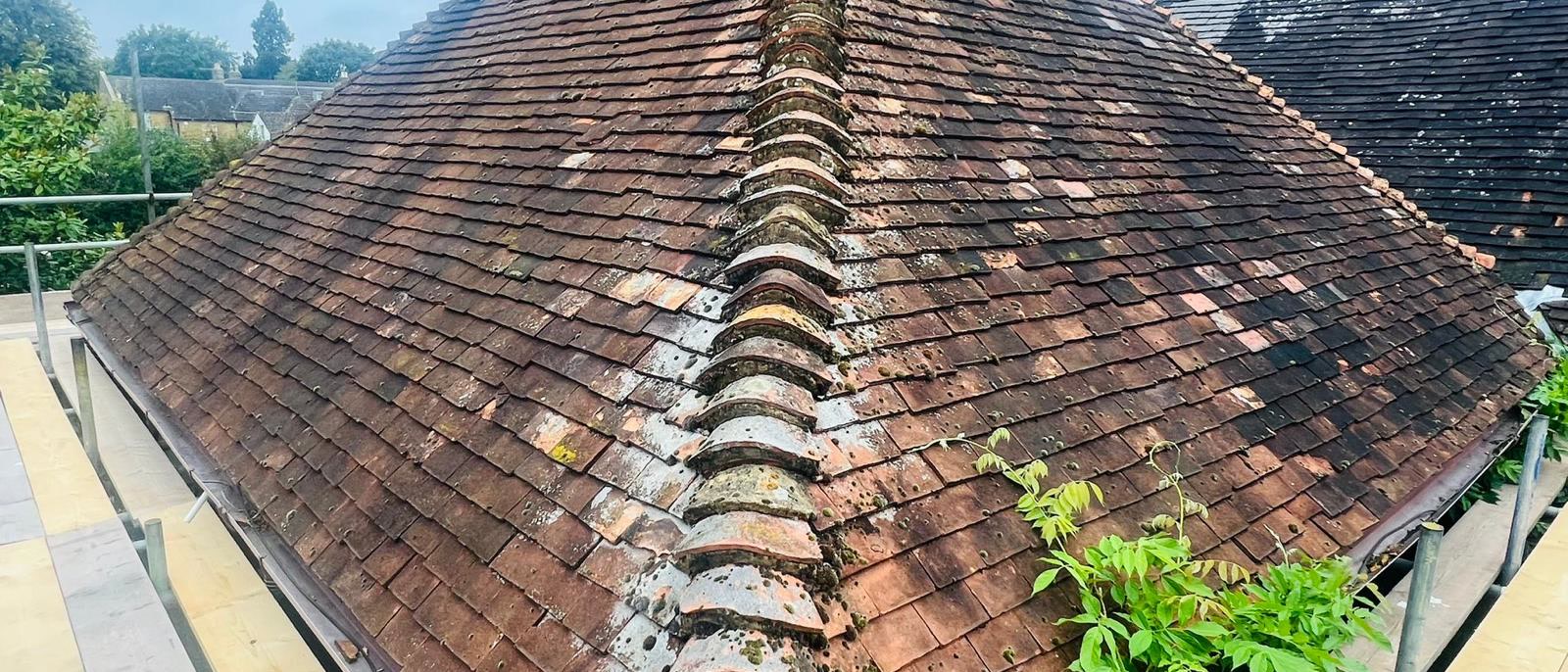
We are JD Home Improvements, a family run roofing team in Shirehampton, and we clear moss from roofs across Bristol and the towns nearby. Here is why moss takes hold on local roofs, when it is worth acting on, and how it should be removed without damaging your tiles in the process.
Why moss grows on Bristol roofs
Moss thrives where roofs stay damp and shaded, especially on rough tiles it can grip, and Bristol has no shortage of those. Our mild, wet climate keeps roofs damp for much of the year, and that is exactly what moss spores need to settle and spread.
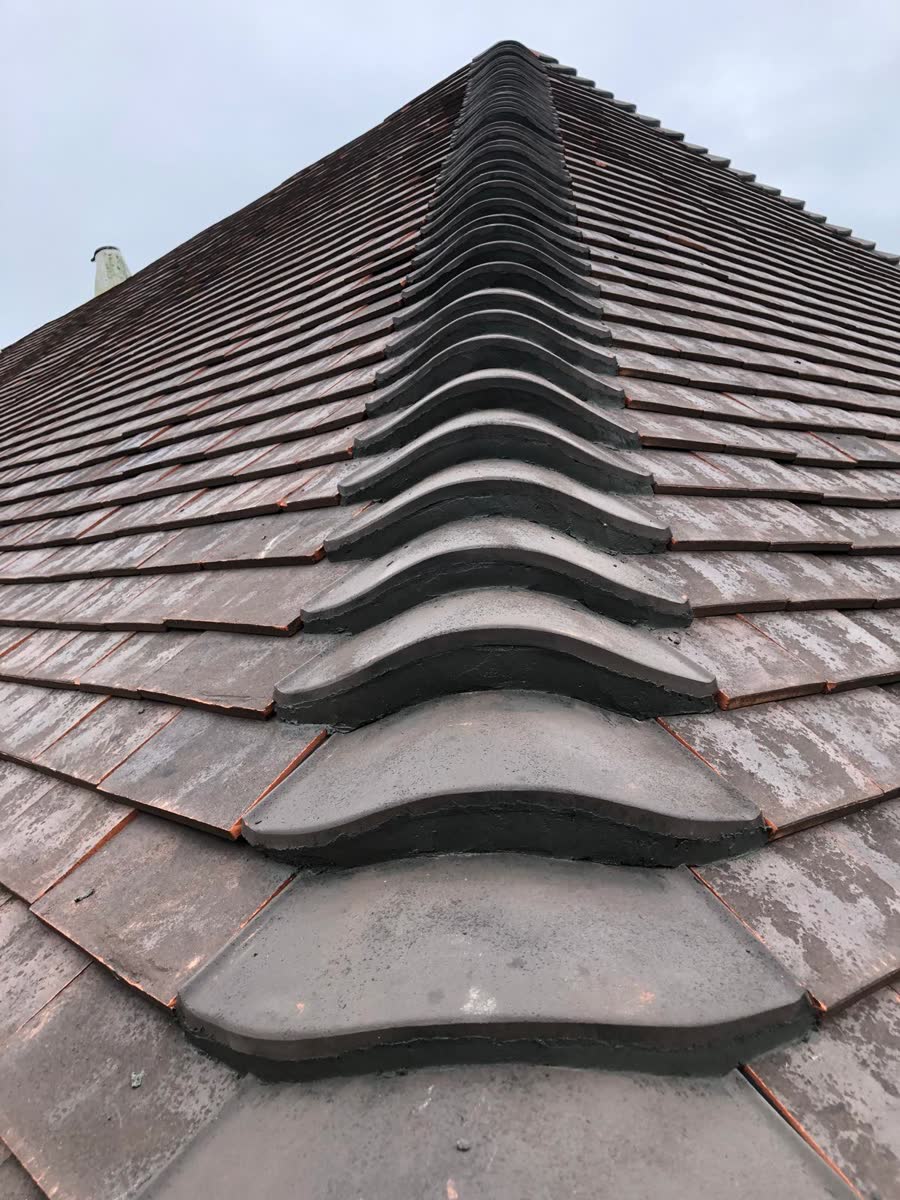
Shade does the rest. North-facing slopes that never quite dry out, and roofs tucked under the trees in leafy streets around Henleaze and Westbury-on-Trym, are the ones that go green first. Older concrete tiles are especially prone, because their surface grows slightly porous with age and gives the moss something to grip. Put a shaded concrete roof in a wet city and moss is almost inevitable.
Is roof moss actually a problem?
A light dusting of moss is mostly cosmetic. Left to build up, though, it causes genuine trouble:
- It holds water against the tiles, keeping the roof wet long after the rain has stopped.
- It blocks the flow into your gutters, so clumps wash down and cause overflows.
- It lifts tiles in a frost. Water trapped in thick moss freezes and nudges tiles apart over time.
- It speeds up wear on ageing tiles that are already losing their surface.
So the honest answer is: a bit does no harm, but a thick, established carpet of moss is worth clearing before it starts moving tiles and feeding your gutters.
How roof moss should be removed
Here is the part that matters most, because this is where a lot of roof cleaning goes wrong. Done properly, moss removal is gentle. We clear the bulk of the moss by hand, brushing and scraping it off carefully so the tiles are not damaged, then treat the roof with a biocide that kills off the remaining spores and keeps regrowth down for a good while afterwards. It is patient work, and it is kind to your roof.
| Approach | What it is | Our view |
|---|---|---|
| Soft removal and biocide | Brushing moss off by hand, then treating the roof | Our standard: safe for the tiles and longer-lasting |
| High-pressure jet washing | Blasting moss off with a pressure washer | We avoid it on most roofs, for the reasons below |
Why we avoid high-pressure jet washing
Jet washing looks dramatic and gets quick results, which is exactly why some firms love it. The problem is what it does to the roof. High pressure strips the protective surface off concrete tiles, which shortens their life and, ironically, leaves them rougher and quicker to grow moss again. It can crack or dislodge older tiles, and it can force water up under the tiles and into the roof space, creating a leak where there was only moss before. For most roofs, especially older concrete and slate, we think the risk is not worth it. Soft removal protects the roof you are trying to look after.
Our roof moss removal process
We keep it simple and tidy:
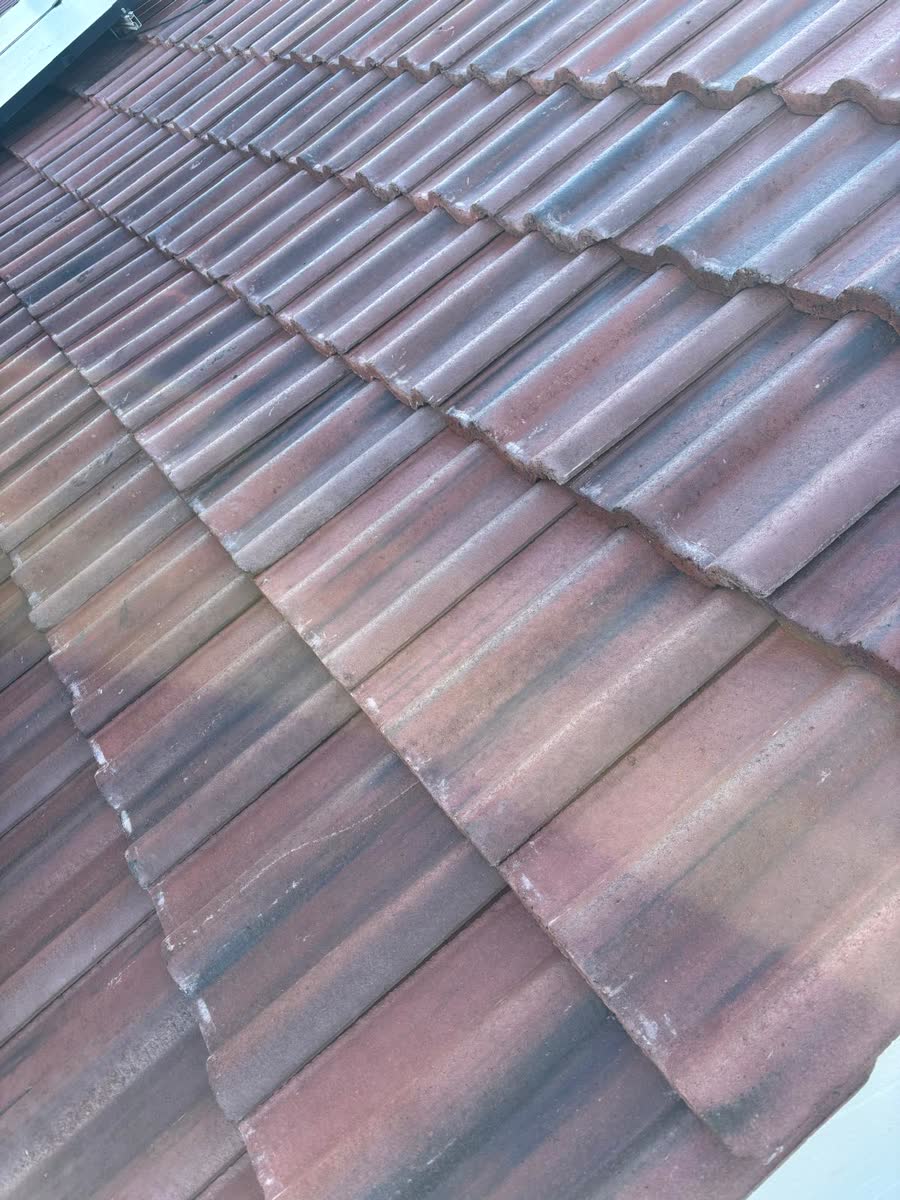
- We take a look. We check the roof is sound and that moss is the only issue, flagging anything else we spot.
- We quote in writing. A clear, no-obligation price before any work.
- We clear the moss by hand. Brushing and scraping it off carefully, working safely from the right access.
- We treat the roof. A biocide goes on to kill lingering spores and slow regrowth.
- We clear the gutters. Loosened moss is cleaned out of the gutters so nothing is left to block them.
- We tidy up. The moss is cleared away and the job left clean.
Keeping moss from coming back
A good clean buys you years, and a few simple steps stretch that further:
- Keep your gutters clear, so water drains and the roof dries out faster.
- Cut back overhanging branches where you can, to let more light and air onto the roof.
- Consider zinc or copper strips along the ridge. When it rains, they release a trace of metal that washes down the roof and holds moss back naturally.
- Have the roof treated with a biocide during removal, which keeps working long after the job is done.
Moss on different roof coverings
Concrete tiles grow more moss than anything else. Their surface wears rough over the decades, and that texture gives moss spores somewhere to settle and hold on. Many post-war and 1970s homes around Bristol have concrete tiled roofs, which is why so many of them turn green on their shaded slopes.
Clay tiles and natural slate are smoother, so moss takes longer to establish. When it does, it tends to collect in the joints and along the lower edges of each tile or slate, where water lingers. Older clay can be brittle, and slate can crack if someone walks on it carelessly, so both need a gentle hand when we clear them.
Moss, gutters and the walls below
Moss does its quietest damage in the gutters. Every time it rains, loose pieces wash down the roof and collect at the outlets until the downpipes block. Water then spills over the front of the gutter or backs up under the bottom row of tiles.
Overflowing gutters soak the brickwork and render below, leaving green streaks and damp patches inside. Over time, the timber fascia behind the gutter can rot as well. That is why we always clear the gutters as part of a moss removal job, rather than leaving the debris for the next downpour to deal with.
How often a roof needs clearing
There is no fixed rule. A sunny, south-facing roof may stay clear for many years after treatment, while a north-facing slope under mature trees can show new growth within a few seasons. The biocide we apply slows regrowth considerably, though it does not stop it forever.
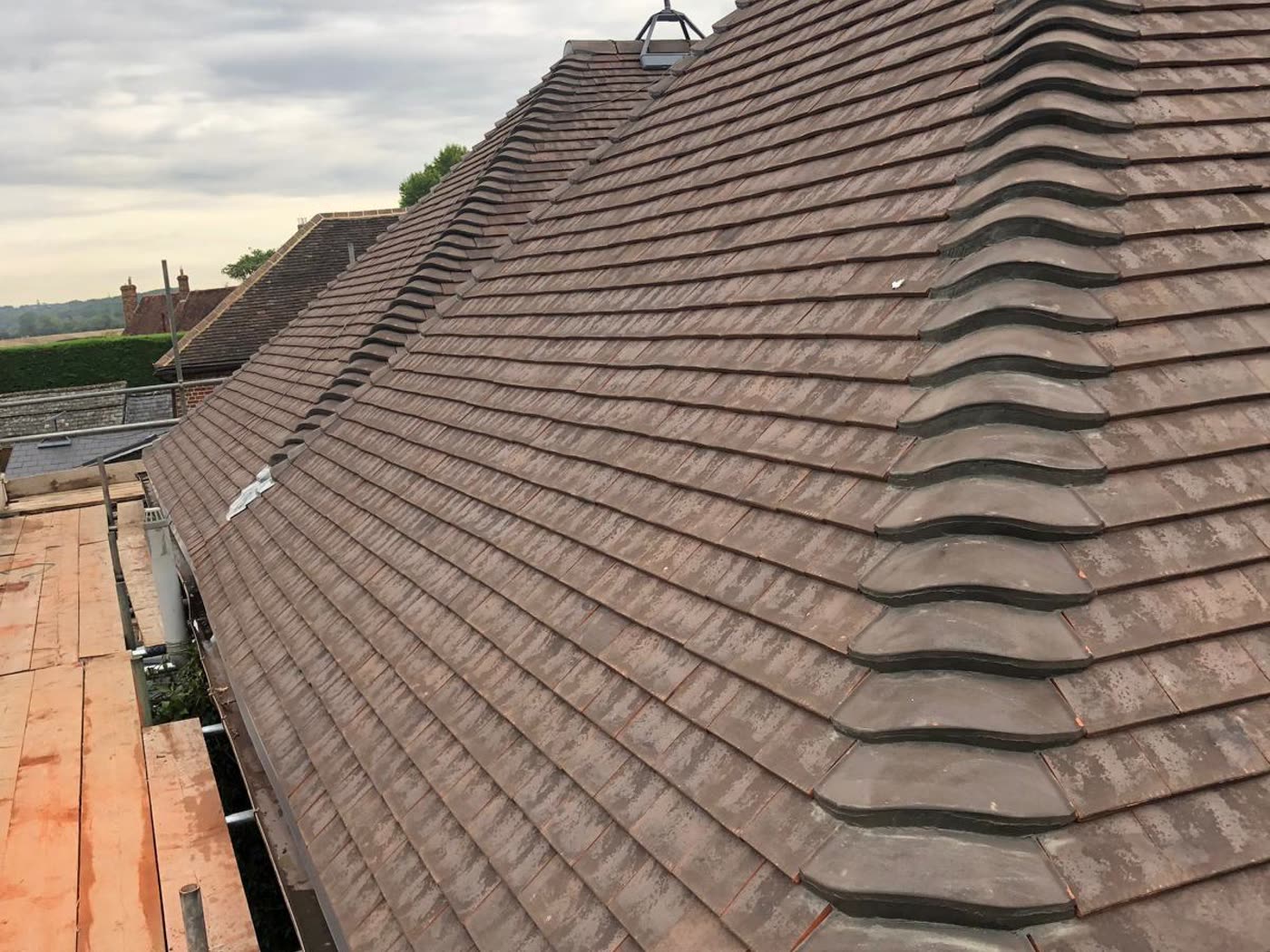
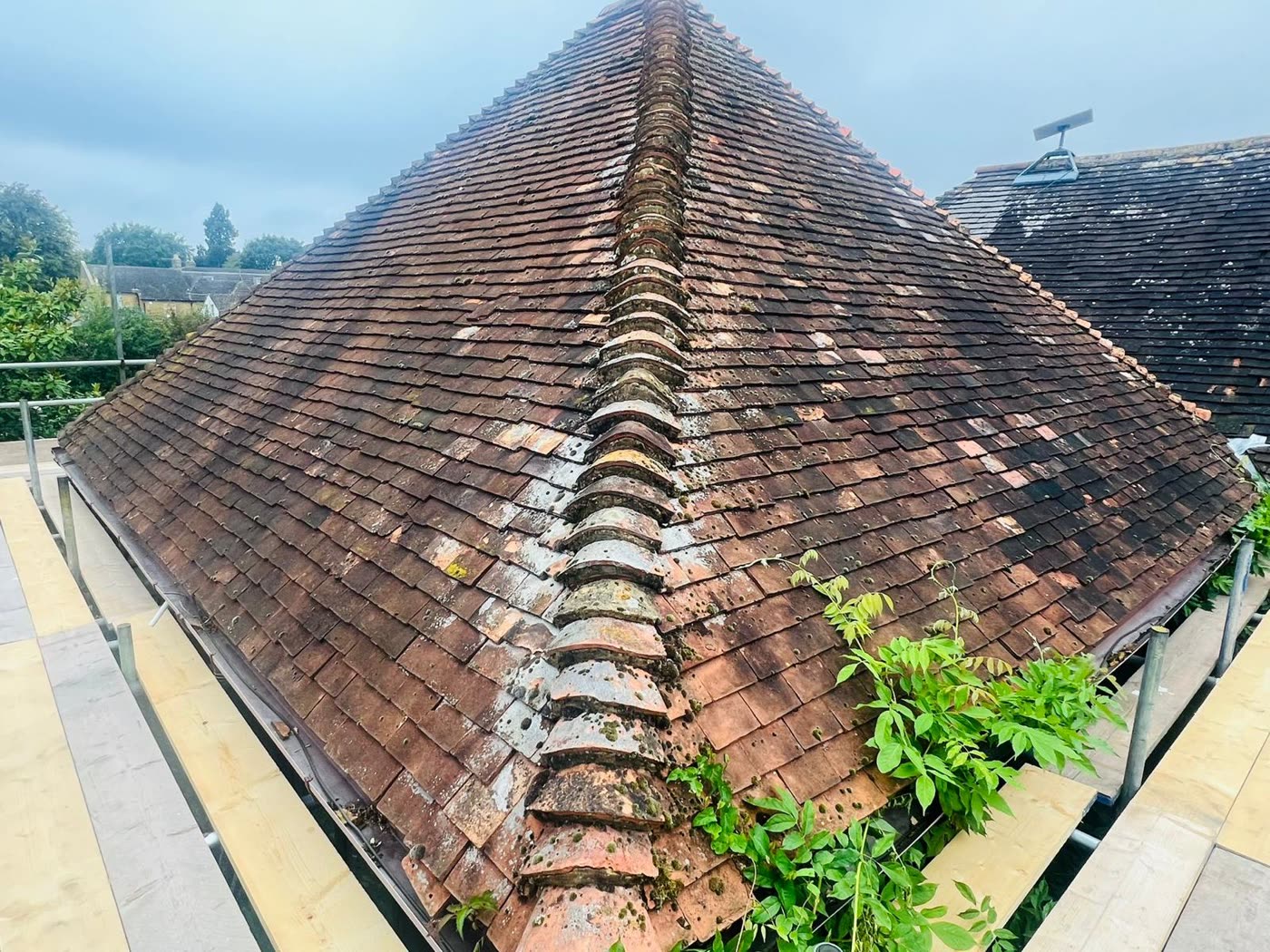
A quick look from the garden each spring will tell you a lot. If you can see green tufts building up along the tile edges, it is time to book a visit before the moss gets thick enough to lift tiles or block gutters. Catching it early also keeps the job quicker and the cost lower.
Working safely on your roof
Moss removal means working at height on a surface that is often damp and slippery. Depending on the roof, we work from ladders or scaffold, and we take care not to walk on fragile tiles or slates. We also protect paths and plants below, since moss and debris come off the roof as we work.
When moss means more than a clean
Sometimes clearing the moss reveals a problem it was hiding, a cracked tile or a patch where water has already been getting in. If we find anything like that, we will tell you straight and sort it under our roof repairs. On an older pitched roof with widespread damage under the green, we will give you an honest view rather than just tidying the surface. Most of the time, though, it really is just a clean the roof needed.
Areas we cover
We clear roof moss across Bristol and the surrounding towns. Leafy roads in Henleaze produce some of the mossiest roofs we see, and homes in Long Ashton, surrounded by parkland and woods, are not far behind. Give us a ring and we will tell you whether we cover your street.
Roof moss removal FAQs
Does moss really damage a roof?
A thin layer is mostly cosmetic, but a thick build-up holds water and can lift tiles in a frost. Clearing it before it reaches that stage is the sensible move.
Should I pressure wash my roof?
We would advise against it on most roofs. High pressure strips the surface off concrete tiles and can force water under them. Soft, careful removal with a biocide is kinder and lasts longer.
How do you remove roof moss?
We brush and scrape the moss off by hand, then treat the roof with a biocide that kills off the remaining spores and slows regrowth. It is gentle, thorough work.
Will the moss grow back?
In our climate some regrowth is natural over time, but a biocide treatment holds it back for a good while, and keeping gutters clear and branches trimmed helps a lot. Zinc strips along the ridge slow it further.
How often should moss be cleared?
Most roofs are fine with a clear every few years, though shaded, north-facing roofs may want it a little more often. We can advise based on yours.
Can you clear my gutters at the same time?
Yes, and we always do after a moss clean, since loosened moss washes straight into the gutters. Clear gutters are part of keeping the roof dry.
Will moss removal damage my clay or slate roof?
Not when it is done carefully. We remove moss by hand and avoid walking on fragile tiles or slates, which protects older roofs that pressure washing could crack.
Do you clear the gutters at the same time?
Yes. Moss washes into the gutters as we work, so we clear them and check that the downpipes run freely before we finish.
Is moss on a slate roof a problem?
Less often than on concrete tiles, since slate is smoother. Moss can still collect in the joints and hold water there, so it is worth clearing before it spreads.
Let us get your roof clean
A mossy roof is easy to put off, but clearing it protects the tiles and keeps your gutters flowing. We will do it the gentle way, treat the roof to keep moss at bay, and flag anything underneath that needs attention. Browse our other roofing services, or get in touch and we will come and take a look.