
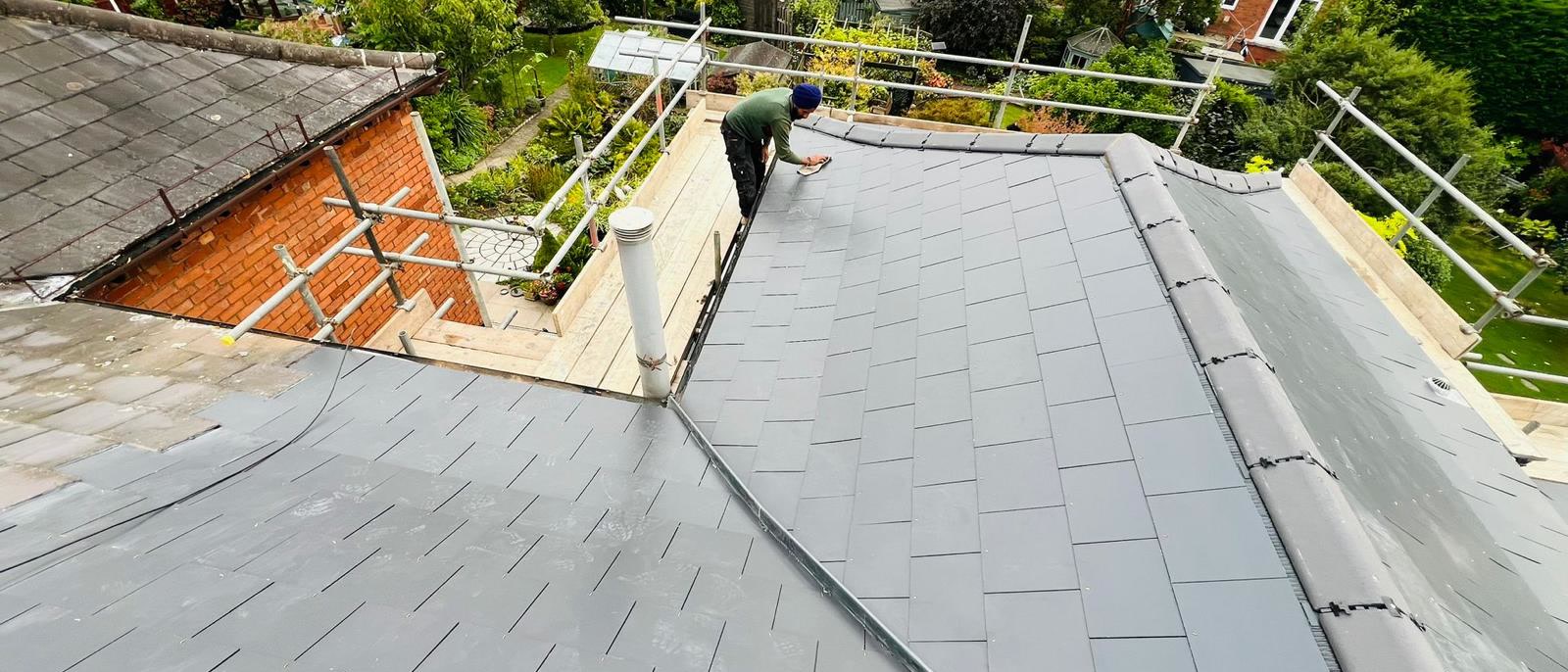
If you are reading up on pitched roofing, you might be planning a re-roof or just trying to judge whether yours has good years left. Either way, you want honest, local knowledge rather than a hard sell. We are JD Home Improvements, a family run roofing team based in Shirehampton, and pitched roofs are everyday work for us right across Bristol and the towns nearby. Here is how they work and what suits local homes.
What pitched roofing actually means
A pitched roof is a layered system, and each layer has a job. Understanding them makes every quote easier to read:
- The covering, the tiles or slates you see from the street
- Battens, the timber strips the tiles hook onto
- Underlay, a breathable membrane beneath the battens that catches any water that gets past the tiles
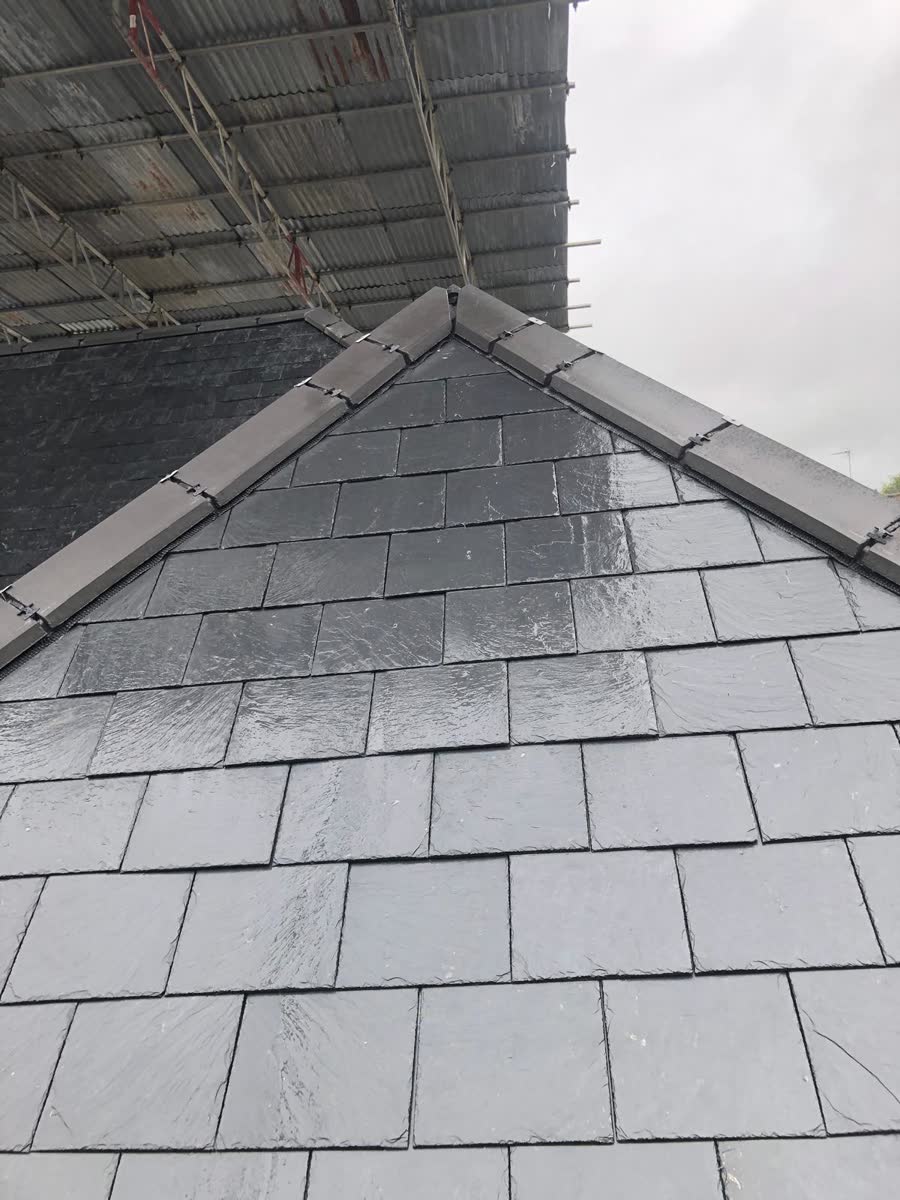
- Ridge and hips, the capping along the top and the sloping edges
- Verges, the finished edges at the gable ends
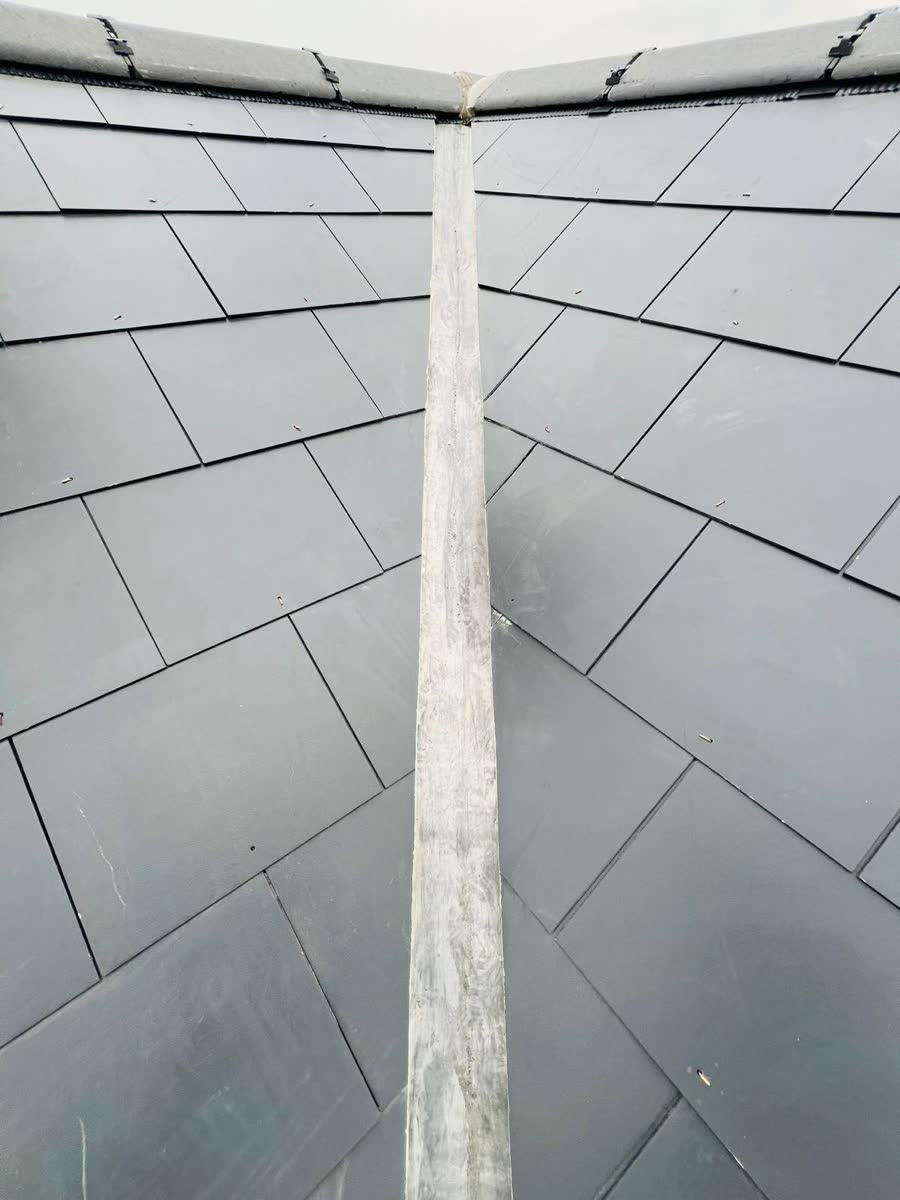
- Valleys, the channels where two slopes meet
- Flashing and leadwork, the seals around chimneys and abutments
When a pitched roof leaks, one of those elements has usually failed rather than the whole roof. That is why a careful roofer looks at the system, rather than only the broken tile you noticed. Smaller faults fall under our roof repairs; when several elements are tired at once, a re-roof makes better sense.
Pitched roofs on Bristol homes
Bristol's housing is beautifully varied, and the roof tells you a lot about the age and character of a home.
Choosing your roof covering
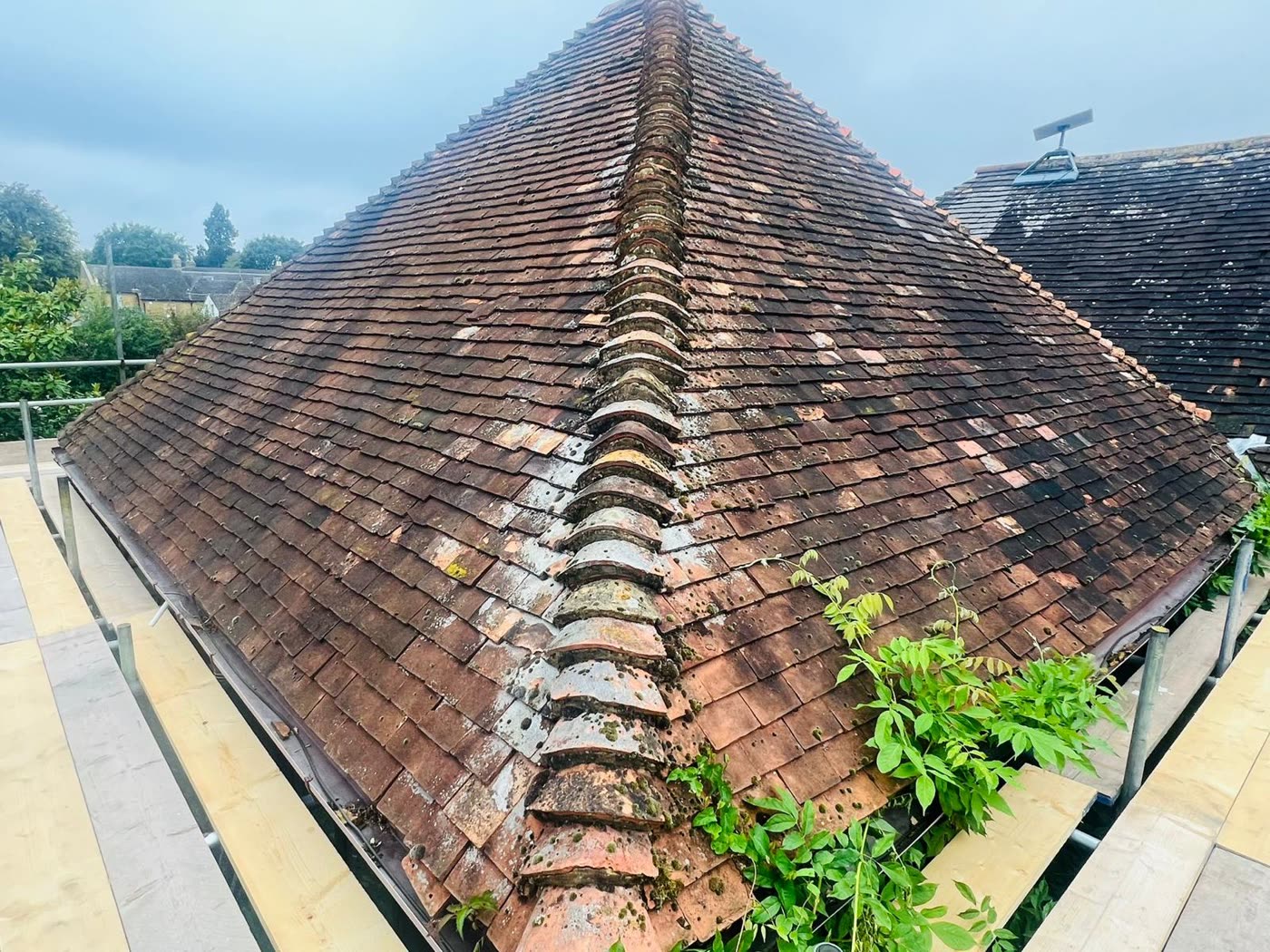
Older terraces in Bedminster, Totterdown, Bishopston and Horfield were built with natural slate or clay tiles. Post-war estates and newer builds around Bradley Stoke and Stoke Gifford lean towards concrete tiles. Each material ages differently, so matching new work to what is already there takes a practised eye.
Conservation streets and older terraces
Parts of Clifton and Cotham sit in conservation areas, and some homes are listed. There, the material and even the colour of a roof can be controlled, so a re-roof is as much about sympathetic matching as sound workmanship. We are used to sourcing clay and reclaimed slate that keeps a period street looking right.
Wind and shaded slopes
Our damp, breezy South West climate is hard on roofs. Wind off the Severn Estuary lifts tiles and works ridge mortar loose, especially on exposed ground towards Kingswood and the coast. Shaded, north-facing slopes grow moss that holds water and nudges tiles apart in a frost. Keeping on top of clearing moss and re-bedding loose tiles stops small movement becoming a real leak.
Fitting a new pitched roof, step by step
A re-roof sounds daunting, so here is how we run one from start to finish:
- We inspect and advise. We go up and assess the covering and the timbers beneath, then talk you through your options.
- We set up safely. Most re-roofs need scaffold, so the team can work properly and tidily.
- We strip the old covering. Tiles come off, the roof is cleared, and your property is protected as we go.
- We check the structure. Battens and any tired timber are repaired or replaced before anything new goes on.
- We lay the new system. A breathable underlay and fresh battens go on first, then your chosen tiles or slates, with ridges and verges finished to last.
- We handle leadwork and ventilation. Flashing around chimneys is renewed, and we add ventilation to keep the roof space dry.
- We finish and clean up. You get a final check and our workmanship warranty, with a 15 year guarantee on the work.
Ridges, verges, leadwork and ventilation
Four jobs sit alongside the tiles on every pitched roof, and each one causes leaks or damp when it is neglected.
Dry ridge and dry verge systems
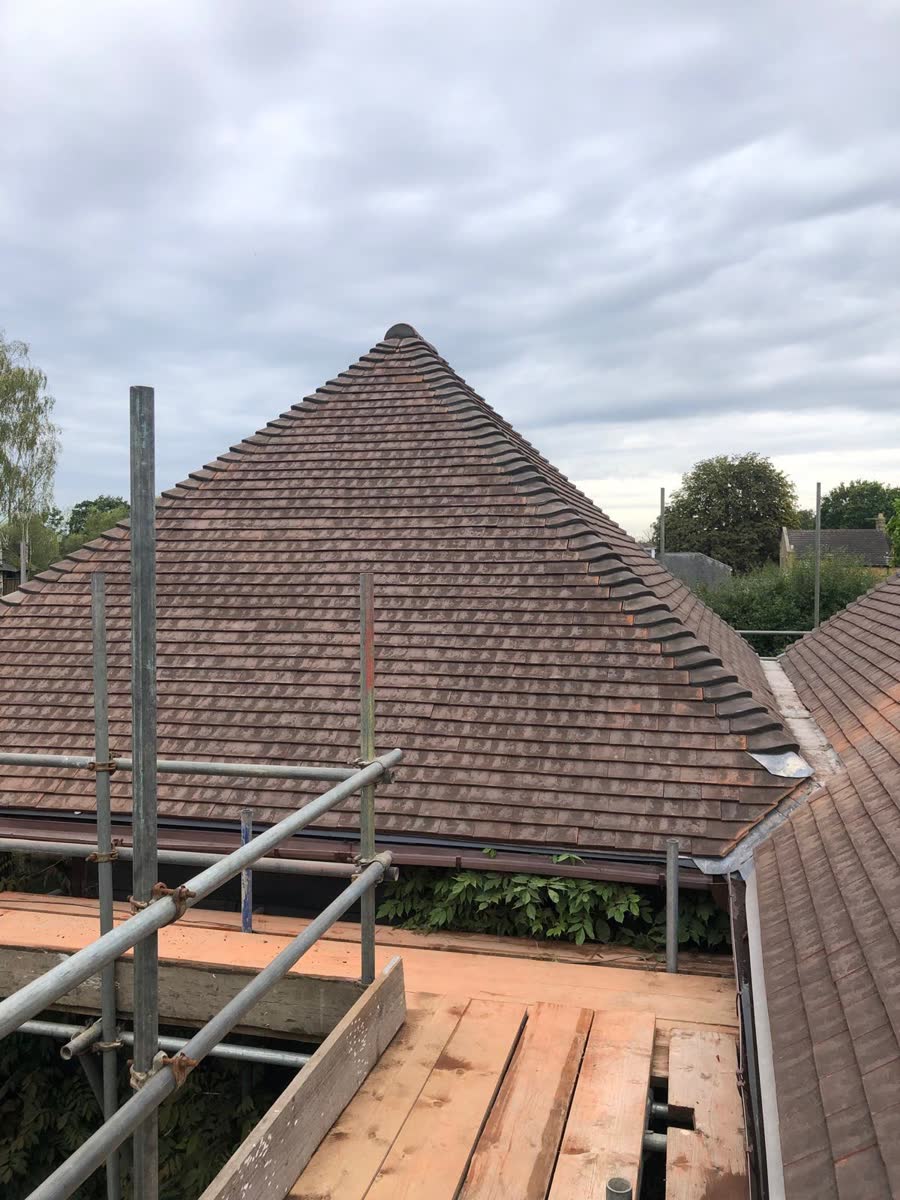
Dry ridge and dry verge systems fix the ridge and edge tiles mechanically, with clips and interlocking caps, rather than bedding them in mortar. With no mortar to crack and wash out, they cope far better with wind and need much less upkeep. Current British Standards also expect ridge and verge tiles to be mechanically fixed rather than relying on mortar alone. We fit dry systems on new roofs and re-roofs, and retrofit them on existing roofs where the old mortar keeps failing.
Dry systems need looking after too. Verge caps can crack or blow off in a storm, and cheaper systems sometimes loosen as the plastic ages in the sun. We replace broken caps and units, refix loose ones, and where a budget system has failed across the roof, upgrade it to a sturdier one.
Leadwork
Lead seals the joints a tile cannot: flashings where the roof meets a wall, soakers tucked under the tiles at an abutment, and lead-lined valleys between two slopes. When lead cracks or loses its pointing, water runs straight behind it. We dress new lead to shape and point it back into the brickwork. Leadwork around stacks is covered in more detail on our chimney repairs page.
Repointing
Ridge tiles and verges on many Bristol roofs are bedded in mortar, and that mortar cracks and washes out after years of wind and frost. Once it goes, ridge tiles rock loose and rain finds the gap. We rake out failed mortar and repoint or re-bed the tiles, or switch to a dry ridge and verge system where that suits the roof better. It is one of the most common jobs we do, and caught early it stays a small one.
Roof ventilation
A roof space needs to breathe. Warm, moist air from the house rises into the loft, and without a way out it condenses on the underside of the roof, soaking timber and insulation. Signs include damp patches in the loft and black mould on the rafters. A breathable underlay, tile vents, ridge vents or eaves ventilation lets that moisture escape, and we check ventilation on every roof we work on.
Repair or re-roof? An honest steer
A good roofer will not sell you a new roof you do not need. As a general guide:
| Situation | Usually a repair | Usually a re-roof |
|---|---|---|
| A few slipped or cracked tiles | Yes | |
| One isolated leak, the rest sound | Yes | |
| Heavy moss but tiles still good | Yes, clean and re-bed | |
| Underlay perished across the whole roof | Yes | |
| Slate flaking or tiles crumbling across slopes | Yes | |
| A roof 60 years or older with repeat leaks | Yes |
If a repair will give you years of good service, we will say so. If you are paying for patch after patch on a tired roof, we will talk you through a full new roof and let you decide with the facts in front of you.
Roofing materials compared
The right covering depends on your home, your street and your budget. Here is how the three mainstays stack up:
| Material | Look | Typical lifespan | Good to know |
|---|---|---|---|
| Natural slate | Slim, elegant, traditional | 80 to 100+ years | Common on older terraces; a premium finish that keeps period homes right |
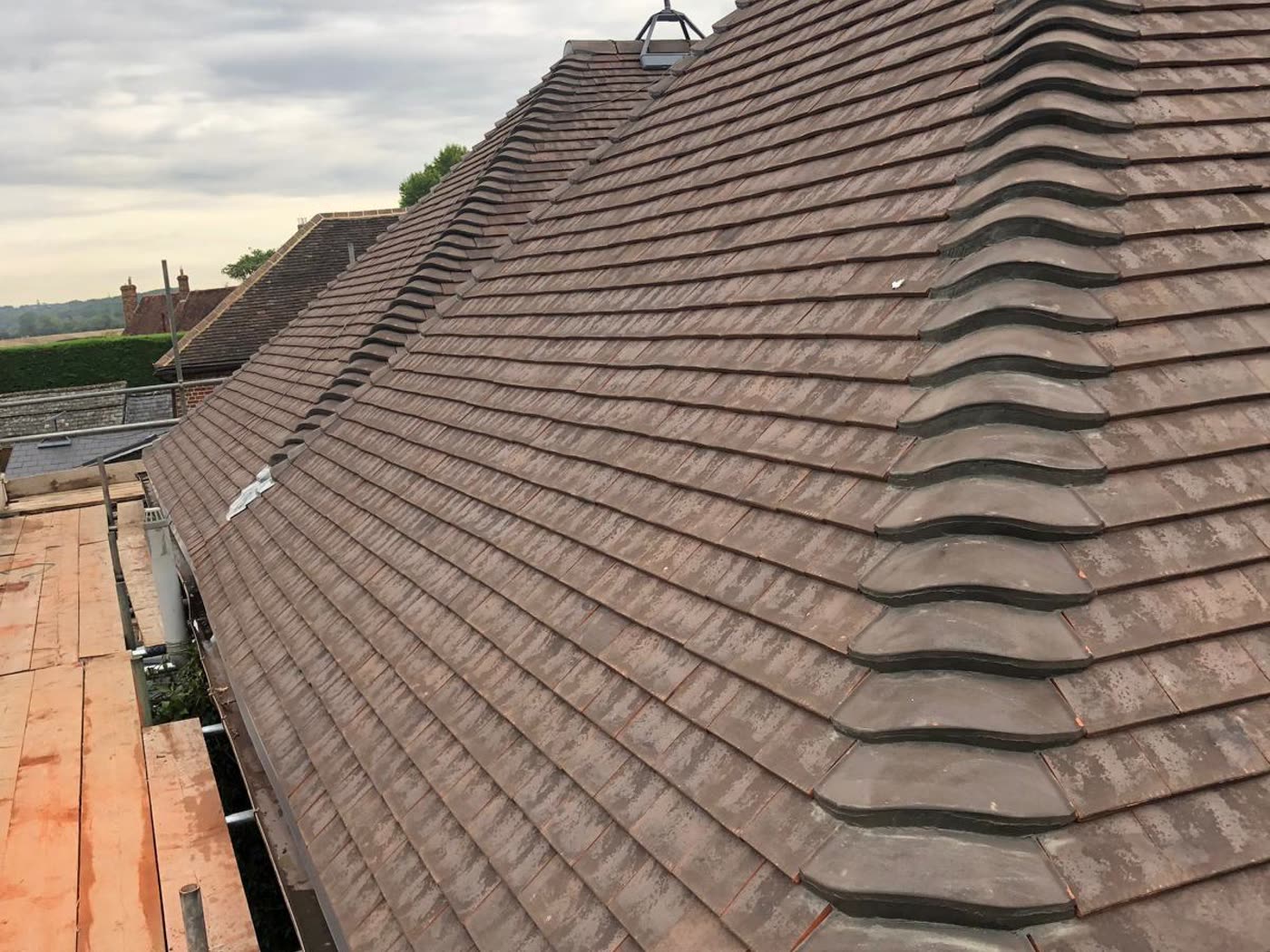
| Clay tiles | Warm and characterful, ages well | 60 to 100 years | Holds its colour; well suited to conservation streets |
| Concrete tiles | Clean, uniform, wide choice | 40 to 60 years | Hard-wearing and budget-friendly; heavier, so the structure matters |
Lifespans assume the roof is laid well and looked after. Workmanship and ventilation matter as much as the material itself.
What affects the cost of a pitched roof
We price every roof after seeing it, so be wary of anyone quoting blind. A handful of things move the figure:
- Size and complexity. Hips and valleys take more time than a simple two-slope roof.
- Material. Natural slate and heritage clay cost more than standard concrete tiles.
- Access and scaffold. Height and awkward access both add to the job.
- Condition underneath. A roof hiding rotten timber needs more work than one with sound battens.
Our quotes are free and come with no obligation. You can request a free quote and we will arrange a look at a time that suits you.
How to choose a pitched roofing contractor
Pitched roofing is skilled work, and the finish depends on the hands doing it. Here is what to look for, and what you get from us:
- Proper accreditation. We are registered with the Confederation of Roofing Contractors (CORC) and our team holds CSCS cards.
- A real inspection. Steer clear of anyone who quotes without going up to look.
- A clear written quote. Itemised, so you know exactly what you are paying for.
- Material know-how. Matching tiles and slate to your home, including conservation streets.
- Local and accountable. We work from Shirehampton, and you only pay once the job is finished to your satisfaction.
If a roof problem ever turns urgent, we also offer fast call-outs for sudden roof trouble, so you are never stuck with water coming in.
Areas we cover
We fit and repair pitched roofs across Bristol and the surrounding towns. Victorian villas in Westbury-on-Trym carry natural slate that often needs relaying, and the terraces of Southville have slate roofs with rear outriggers that bring their own repairs. Give us a ring if you are unsure whether we cover your area.
Pitched roofing FAQs
How long does a pitched roof last?
It depends on the material and the workmanship. Natural slate can last a century, clay tiles 60 to 100 years, and concrete tiles 40 to 60. Good ventilation and the odd minor repair help any roof reach the top of its range.
Clay, concrete or slate, which should I choose?
Clay and slate suit period and conservation homes and last longest. Concrete offers a wide choice at a friendlier price. We will recommend what fits your home, your street and your budget.
Can I just re-roof over the old tiles?
We do not advise it. Laying over old coverings hides tired timber and adds weight the structure was not designed for. Stripping back lets us check and renew the underlay and battens, which is where lasting quality comes from.
How long does a re-roof take?
It depends on the size and shape of the roof, along with the weather. We give you a realistic timescale with your quote. We give you a timescale in your quote.
Do I need scaffolding?
Most pitched work needs scaffold so the team can work safely and to a high standard. We arrange it as part of the job.
What are dry ridge and dry verge systems?
They fix the ridge and edge tiles with screws and clips rather than mortar. That means better resistance to wind and almost no upkeep, which is why we fit them where a roof suits.
Will a new roof match my street or conservation area?
Yes. We are used to sourcing clay and reclaimed slate to keep period streets and conservation homes looking right, and to meeting local requirements.
Let us take a look at yours
A pitched roof is one of the biggest things protecting your home, and it rewards being looked after by people who know their trade. Whether you need a single slipped tile sorted or a full re-roof, we will give you an honest view and a fair, free quote. Have a browse of our other roofing services, or get in touch and we will arrange to come and see it.