
Whether you are buying a home or simply wondering what is going on above your ceilings, an inspection takes the guesswork out. We are JD Home Improvements, a family run roofing team based in Shirehampton, and we inspect roofs across Bristol and the towns nearby. We then write up what we find in a clear report you can keep and use to plan work over the next few years.
When a roof inspection makes sense
Most people call a roofer once water is already coming in. An inspection is worth booking earlier, at moments like these:
- Buying a house. Homebuyer surveys usually look at the roof from the ground, and many end with a line recommending further investigation by a roofer. We go up and give you the detail before you commit.
- Selling a house. Knowing the condition of your roof before a buyer's surveyor does means no surprises during negotiation.
- Letting a property. Landlords can catch small faults early and keep a dated record of the roof's condition.
- After a storm. Wind can lift tiles and loosen ridges without anything obvious showing from the street.
- Before winter. An autumn check leaves time to fix small problems before the wet months arrive.
- Planning bigger work. If you are weighing up a re-roof or a loft conversion, you need to know what the roof underneath is really like.
- An older roof. Once a roof passes 40 or 50 years, a check every few years is a sensible habit.
What we check
A thorough inspection looks at the roof as a whole system, from the outside and, where we can get in, from the loft. Here is what we cover:
| Area | What we look at | Common findings |
|---|---|---|
| Tiles and slates | Slipped, cracked, porous or missing pieces | Wind-slipped tiles, flaking slate |
| Ridges, hips and verges | Mortar, fixings and dry ridge or verge systems | Cracked bedding, loose ridge tiles, broken verge caps |
| Flashing and leadwork | Abutments, valleys and soakers | Split or lifted lead, failed pointing |
| Chimney | Pointing, flaunching, pots and cowls | Crumbling mortar, cracked flaunching |
| Flat roof areas | Covering, falls, upstands and outlets | Pooling water, splits, blistered felt |
| Gutters and roofline | Gutters, downpipes, fascias and soffits | Blockages, leaking joints, rotten timber |
| Loft side | Underlay, timbers, ventilation and insulation | Damp, condensation, daylight, rot |
| Moss and growth | Moss, lichen and debris | Moss holding water, blocked valleys |
Inspecting from the roof and the loft
Every roof is different to reach, so we pick the safest way to see it properly. Low roofs and bungalows can often be inspected up close from ladders. On taller houses, we combine a close look at the parts we can safely reach with a careful check from the ground, and we only suggest scaffold where it is genuinely needed to see something that matters.
Looking inside matters just as much. From the loft we can spot daylight through gaps, stains on the timbers, perished underlay and signs of condensation that never show from outside. A roof can look tidy from the street while quietly rotting from within, and the loft is usually where that shows up first.
What your report includes
After the inspection, we put our findings in writing, in plain English. A typical report covers:
- A summary of the overall condition of the roof
- Each part of the roof we checked, with notes on what we found
- Photos of anything worth showing you
- What needs doing now and what can wait
- Our honest view on whether repairs will do or replacement is worth planning for
We sort findings by priority so you can plan and budget sensibly. Anything urgent is flagged clearly. Anything that is fine is described as fine, because a good report should tell you what is right with your roof as well as what is wrong.
Honest findings, no scare tactics
Roofing has a reputation problem. Doorstep traders who "notice" a loose tile and insist on starting today give the whole trade a bad name, and they leave plenty of homeowners wary of any roofer who climbs a ladder. We understand that completely.
Our approach is simple. We report what is really there, we explain why it matters, and we never invent problems to win work. If a repair is needed, you are free to get other quotes, and if your roof is in good shape we will say so and leave it at that. As a local family firm based in Shirehampton, our reputation travels with every job, so straight answers are all we give.
Buying a home with an older roof
Much of Bristol's housing is old. Victorian and Edwardian terraces in Bedminster, Bishopston, Horfield and Totterdown often carry original slate or clay roofs that have been patched over the decades, while post-war semis around Lawrence Weston, Southmead and Filton are reaching the age where concrete tiles and felt underlay wear out. For a buyer, the roof can be one of the largest hidden costs in a property.
An inspection before exchange tells you whether you are looking at routine maintenance or a new roof within a few years. That knowledge helps you negotiate with confidence and avoid a nasty surprise in your first winter. If your surveyor has flagged the roof or the chimney, tell us your timescale and we will do our best to fit the visit around it.
What happens after an inspection
An inspection is useful in its own right, and there is no obligation to have us do any work afterwards. If you would like us to, we can quote for anything in the report, from roof repairs and chimney work to flat roof replacement or moss removal. Quotes are free and in writing.
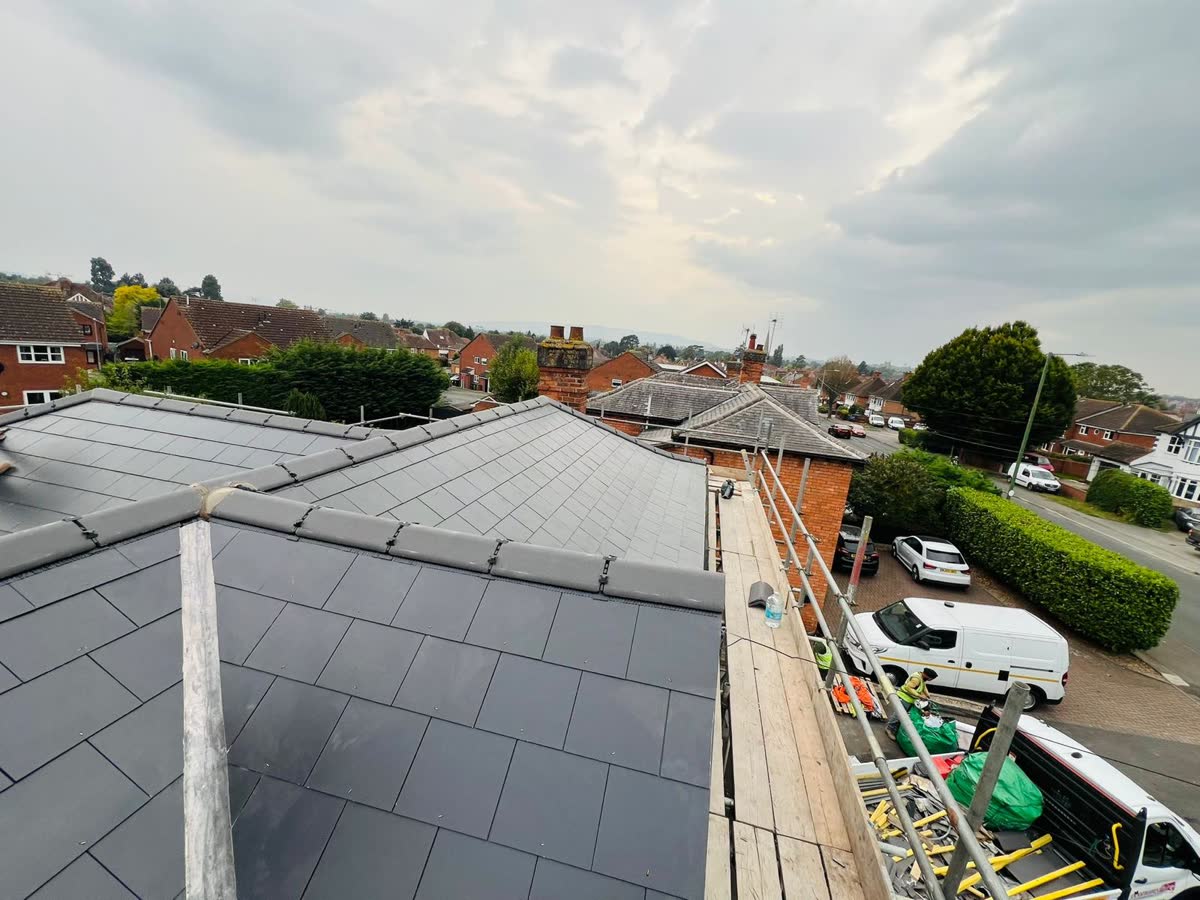
Many homeowners also use the report as a maintenance plan, ticking off small jobs over a few years rather than facing everything at once. Kept up like that, a roof lasts far longer and the bills stay small.
Inspections for landlords and managing agents
If you let out a property or look after a block of flats, a roof inspection helps you plan maintenance rather than react to leaks. Our written report sets out the condition of the roof and what needs attention, so you can budget for the work and share the findings with owners or tenants where needed.
Regular checks are especially useful on buildings with flat roofs or hidden gutters, where problems can develop out of sight for a long time. Catching a blocked outlet or a split in the covering early saves a great deal compared with repairing water damage inside.
Checking a roof after a storm
After a big storm, many homeowners want to know whether their roof has come through unscathed. Missing or slipped tiles are easy to spot from the garden, but damage to ridges, flashing and valleys is often invisible from the ground.
A post-storm inspection checks those vulnerable areas and confirms whether anything has moved. If we find damage, we explain it clearly and quote for the repair. If the roof is sound, you have the reassurance of knowing it for certain.
How to choose someone to inspect your roof
- Ask what you will receive. A verbal "it looks fine" is little help to a buyer or a landlord. Ask for a written report.
- Check accreditation. We are registered with the Confederation of Roofing Contractors (CORC) and our roofers hold CSCS cards.
- Look for independence. Whoever inspects your roof should be happy for you to get other quotes for any work.
- Prefer local. A roofer who knows Bristol housing knows what tends to fail on it.
- Be wary of pressure. Nobody genuine needs a decision on the doorstep.
Areas we cover
We inspect roofs across Bristol and the surrounding towns. Large period houses in Stoke Bishop have complex roofs with hidden valleys that are well worth a proper look, and buyers in Keynsham often ask us to check a roof before they commit. If you are not sure whether we cover your street, give us a ring on 07717 610410.
Roof inspection FAQs
How long does a roof inspection take?
Most homes take an hour or two on site, depending on the size of the roof, the access and whether there is a loft to check. Larger or more complicated roofs take longer.
Do you need to get onto the roof?
Where it is safe, yes, because a close look tells us far more. Where it is not, we combine what we can reach with checks from the ground and the loft, and the report says how each part was inspected.
Will I get a written report?
Yes. You receive our findings in writing, with photos of anything worth showing you and a clear list of priorities.
Can you inspect a roof for a house purchase?
Yes, and it is one of the most common reasons people call us. If your survey recommends further investigation of the roof or chimney, we can carry it out.
How much does a roof inspection cost?
It depends on the size of the roof and how it needs to be reached. Call us and we will explain what the inspection includes and what it costs before you book.
Do I have to use you for any repairs?
Not at all. The report is yours to use however you like, including getting other quotes.
How often should a roof be inspected?
For most homes, a check every few years is plenty, plus a look after any severe storm. Older roofs, and roofs with flat sections or chimneys, benefit from more regular checks.
Can you inspect a roof after storm damage?
Yes. We check the ridges, flashing and valleys where storm damage often hides, then give you a clear account of what we found and what, if anything, needs repairing.
Book your roof inspection
Whether you are buying, selling, letting or simply want to know where you stand, a proper inspection gives you facts instead of worry. Call JD Home Improvements on 07717 610410 and we will arrange a time to come and take a look.