
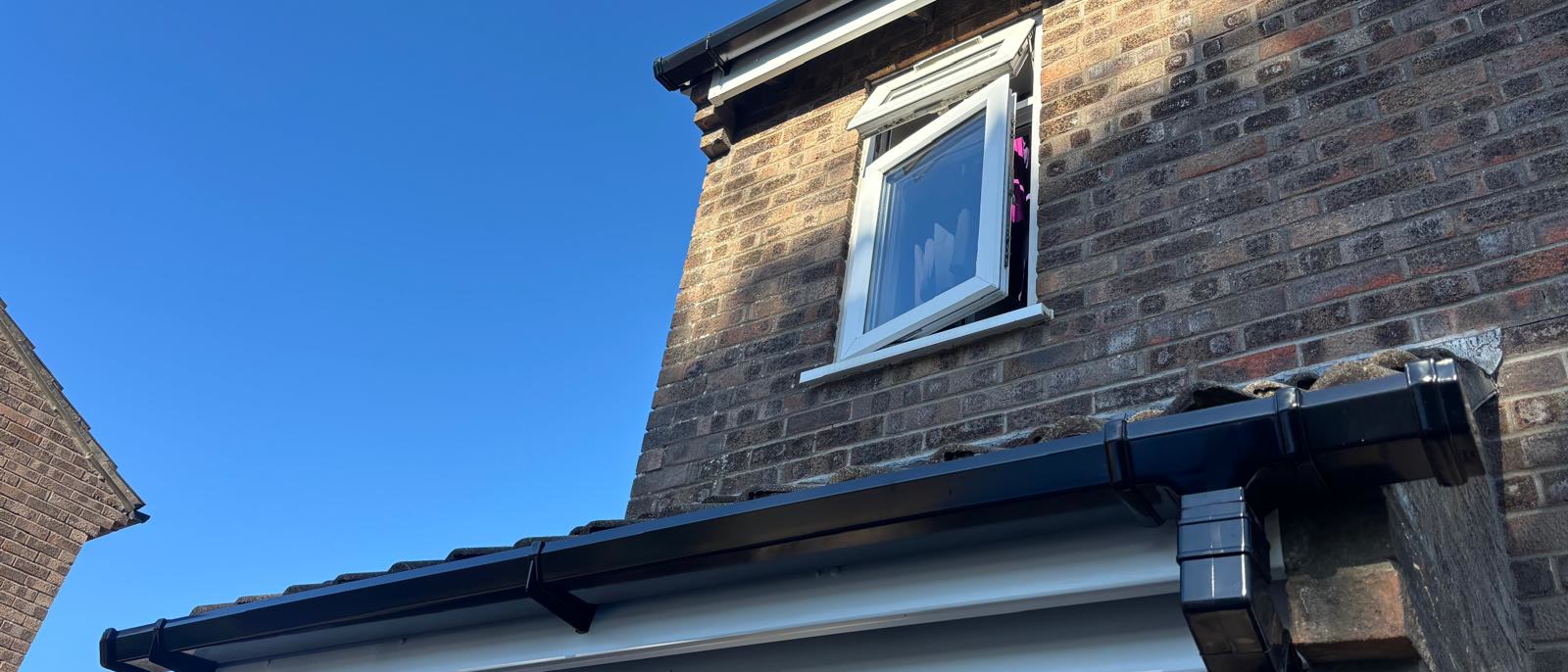
If yours are tired, peeling, leaking or sagging, this page will help. We are JD Home Improvements, a family run roofing team in Shirehampton, and we renew fascias, soffits and gutters across Bristol and the towns nearby. Here is what each part does and how to get it sorted properly.
What fascias, soffits and guttering do
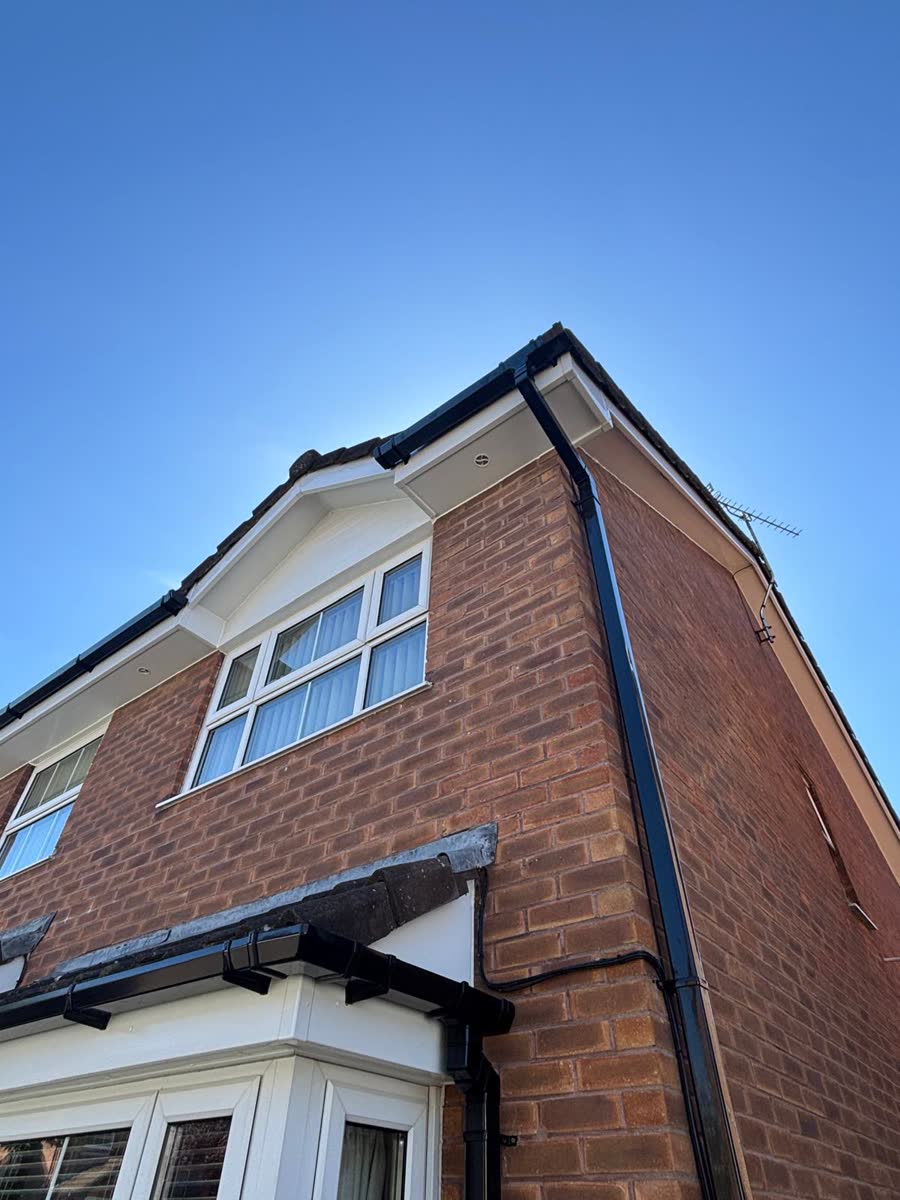
The roofline is a small team of parts, each with a clear role:
| Part | What it is | Its job |
|---|---|---|
| Fascia | The board along the roof edge, behind the gutter | Carries the gutter and seals the ends of the rafters |
| Soffit | The board tucked under the fascia, facing down | Closes off the eaves and lets the roof breathe |
| Bargeboard | The board on the sloping gable edge | Finishes and protects the verge |
| Guttering | The channel fixed to the fascia | Collects rainwater coming off the roof |
| Downpipe | The vertical pipe from the gutter | Takes water down and away from the walls |
Fascias
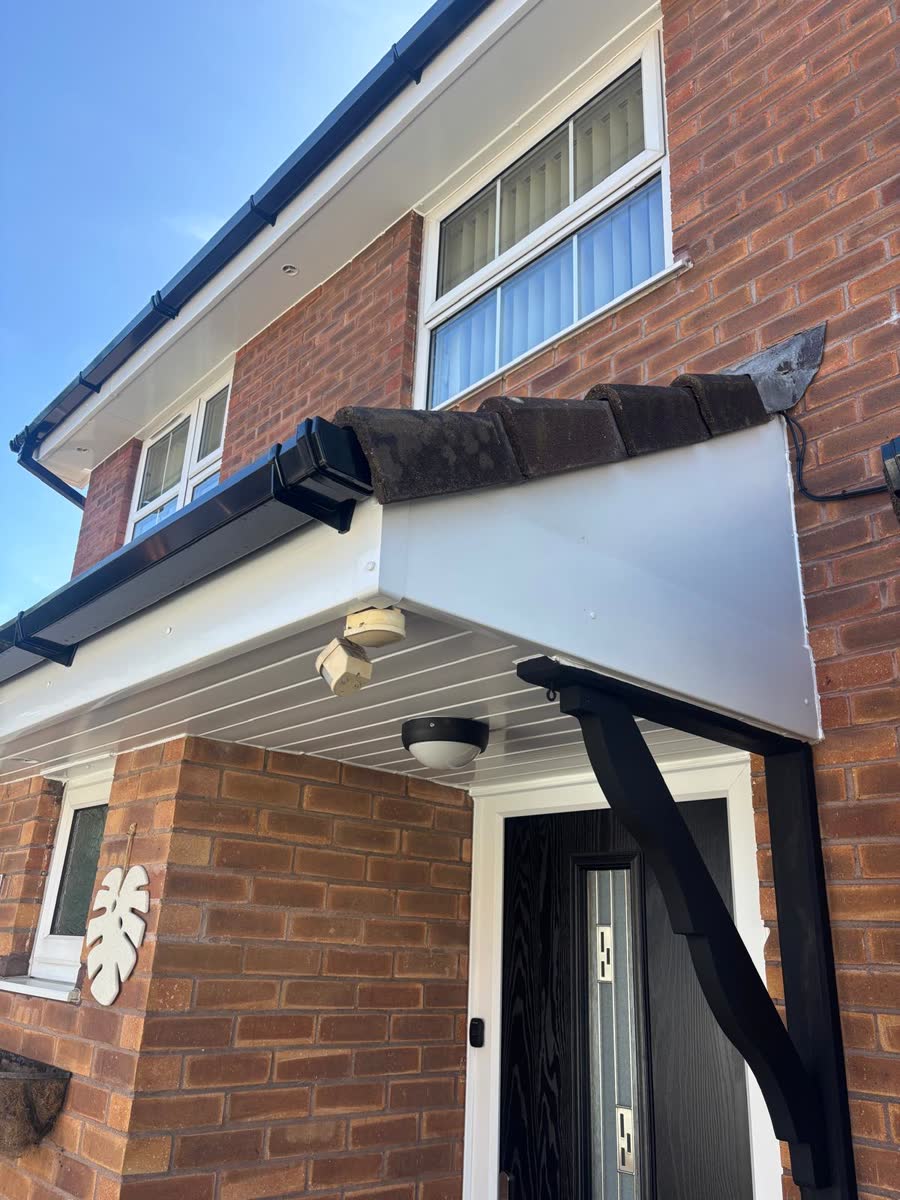
A fascia is the long board you see running along the bottom edge of the roof. It does two jobs at once: it caps the exposed ends of the roof timbers so they do not rot, and it gives the guttering something solid to hang from. When a fascia goes, the gutter behind it soon follows.
Soffits
A soffit is the board underneath the fascia, the one you look up at when you stand beneath the eaves. As well as closing off the gap, a vented soffit lets air flow into the roof space. That airflow keeps condensation down and stops roof timbers rotting from the inside, which is why we almost always fit vented soffits rather than solid ones.
Guttering and downpipes
Guttering catches the rain running off your roof and channels it to the downpipes, which carry it safely to the drain. Set with the right fall and kept clear, it protects your walls and foundations. Blocked or broken, it dumps water exactly where you do not want it.
Why the roofline matters more than it looks
Here is the part most people miss. The roofline is your home's first defence against water at the edge of the roof, and when it fails the damage spreads inwards quietly. A leaking gutter soaks the wall behind it and brings on damp. A rotten fascia lets water reach the rafter ends. Blocked soffit vents trap moist air in the loft, and that is where timber decay begins.
None of this shows up overnight, which is the danger. By the time a homeowner notices a green streak down the render or a soft soffit board, the problem has often been working away for a while. Sorting the roofline early is far cheaper than dealing with wet timber later, and it keeps the rest of your roof repairs list short.
Rooflines on Bristol homes
Bristol's older streets tell the story in timber. Victorian and Edwardian terraces across Bedminster, Totterdown, Bishopston and Horfield were built with painted wooden fascias and soffits and cast iron gutters. Lovely to look at, but they need repainting every few years, and once the wood starts to go, it goes quickly in our wet climate.
Taller three-storey terraces and homes on exposed ground towards Kingswood and the coast take more weather still, and shared valley gutters between terraces are a classic spot for blockages. Across the city, the move these days is towards low-maintenance uPVC, which keeps the clean lines of the original without the yearly painting.
uPVC or timber, and the "capping over" trap
Most homeowners now choose uPVC for fascias and soffits. It does not rot or need painting, and it comes in white, black, woodgrain and more to suit the house. Timber still has its place on period and listed homes where appearance is controlled, and we are happy to work in either.
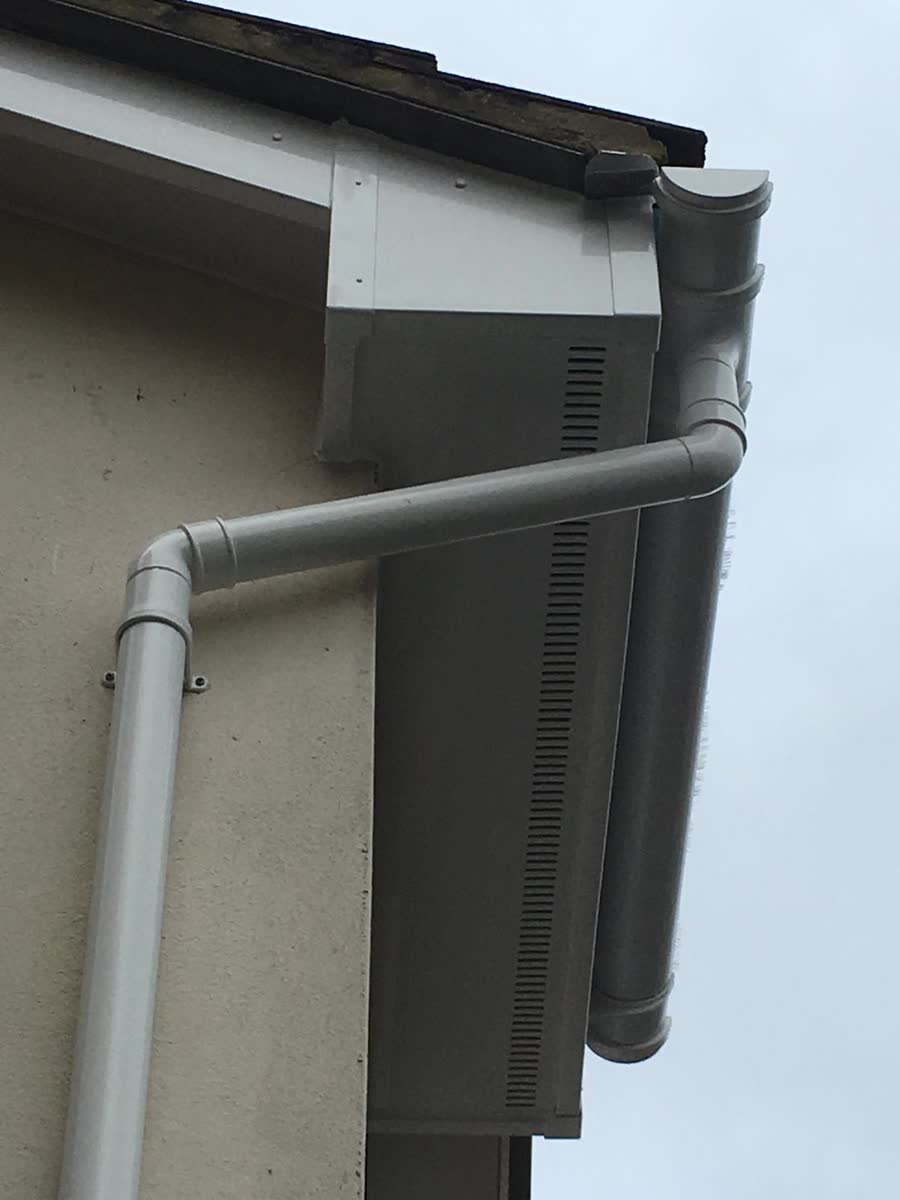
Now the warning. A common shortcut is "capping over", where an installer screws a thin uPVC cover straight onto the old timber without removing it. It looks fine on day one, yet the rotten wood is still there underneath, still holding damp, still decaying against your rafter ends. We do not do it. We strip the old boards off and check the timber beneath before fitting new. It takes longer and it is the only way to do the job right, so always ask a quoting roofer whether they remove the old boards or cover them.
Signs your roofline needs attention
A look up from the garden on a dry day tells you a lot. Watch for these:
| What you notice | Likely cause | How urgent |
|---|---|---|
| Gutter overflowing during rain | Blockage, sag or wrong fall | Sort before it wets the wall |
| Paint flaking off a timber fascia | Weathered or rotting board | Plan a replacement |
| A soffit sagging or with holes | Rot, or birds and pests getting in | Soon |
| A green streak down the wall | A leaking or overflowing gutter | Soon |
| Water dripping behind the gutter | Failed fascia or a loose bracket | Soon |
How we replace fascias, soffits and gutters
We keep it straightforward and tidy:
- We inspect and advise. We check the boards and rafter ends, then tell you what genuinely needs doing.
- We quote in writing. A clear, itemised, no-obligation price.
- We remove the old roofline. Old fascias, soffits and gutters come off in full, never capped over.
- We check the timber. Rafter ends are inspected and treated or repaired before anything new goes on.
- We fit new fascias and vented soffits. In your chosen colour, with ventilation to keep the roof breathing.
- We hang new guttering. Set to the right fall, with downpipes that carry water well clear of the walls.
- We test and tidy. We check it runs clear and back the work with our guarantee.
Roofline work also pairs naturally with a new roof, and many homeowners sort both at once while the scaffold is up.
Gutter repairs and replacement
Not every gutter needs replacing. Often we can re-seal leaking joints or re-set the fall so water runs properly again. A good clear-out makes a real difference too, since leaves and moss washed from the roof are the usual cause of a blockage. We suggest clearing gutters twice a year, in late autumn and spring.
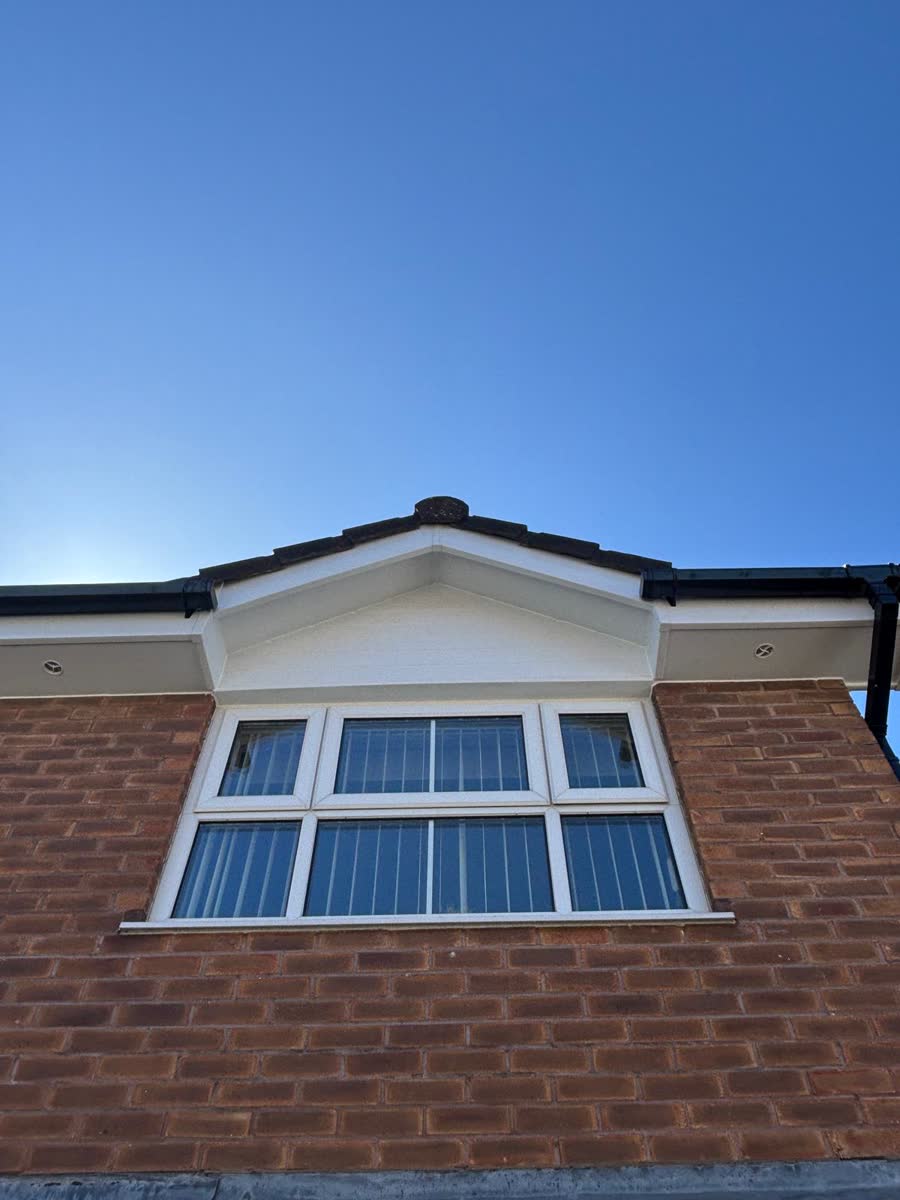
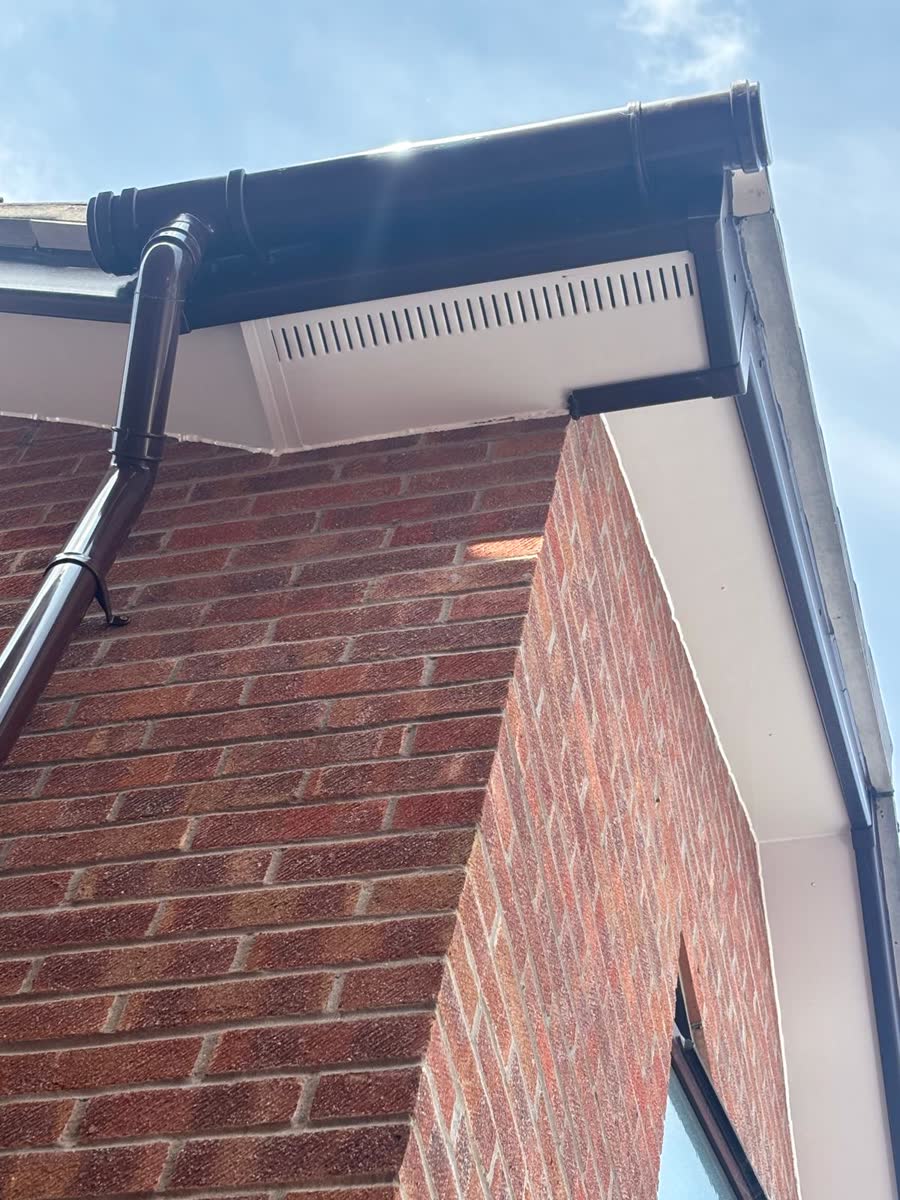
When cast iron has cracked, or uPVC has gone brittle and sagging, replacement is the better value. New guttering with the right falls and secure fixings is a small job that saves a lot of damp-wall grief later.
What affects the cost
We price every job after seeing it, so be wary of a figure given over the phone. The main factors are:
- The size of the house. A two-storey terrace differs from a large detached with long runs.
- Height and access. Three storeys or awkward access may need scaffold.
- What we find. Rotten rafter ends need treating before new boards go on.
- The materials. Colour and gutter style both play a part.
Our quotes are free and come with no obligation. You can request a free quote and we will come and look.
How to choose a roofline installer
The right installer saves you money twice, once now and once in avoided damp later:
- Proper accreditation. We are registered with the Confederation of Roofing Contractors (CORC) and our team holds CSCS cards.
- Full replacement, not capping. Ask directly whether they remove the old boards. We always do.
- A written quote after a look. Never a price guessed from the street.
- A proper guarantee. Ours is 15 years on the work.
- Local and accountable. We are based in Shirehampton, and you only pay once the job is finished to your satisfaction.
If a gutter ever comes down in a storm, we also offer fast call-outs for sudden problems.
Areas we cover
We renew rooflines across Bristol and the surrounding towns. On the 1960s and 1970s estates of Yate, original timber fascias are often rotten behind the paint, and homes in Filton regularly need sagging gutters replaced after years of wind. Give us a ring and we will tell you whether we cover your street.
Fascias, soffits and guttering FAQs
What is the difference between a fascia and a soffit?
The fascia is the upright board along the roof edge that holds the gutter. The soffit is the board underneath it that you see when you look up at the eaves. One carries water away, the other closes the gap and lets the roof breathe.
How do I know if mine need replacing?
Flaking paint, soft or sagging boards, green streaks down the wall and gutters that overflow all point to a roofline past its best. A quick look from the garden usually tells the tale, and we will confirm it on inspection.
uPVC or timber, which is better?
uPVC does not rot or need painting, and it lasts for decades, which is why most homeowners choose it. Timber suits period and listed homes where appearance matters. We fit both.
Can you just cap over my old timber fascias?
We will not, and we would advise against anyone who offers to. Capping over hides rotten wood that keeps decaying against your rafter ends. We remove the old boards and check the timber before fitting new.
How often should gutters be cleaned?
Twice a year is a good rule, in late autumn once the leaves are down and again in spring. Clear gutters are the simplest way to avoid damp walls.
Why do my gutters overflow?
Usually a blockage from leaves and moss, or a fall that runs the wrong way. All are fixable, and worth sorting before the water reaches the brickwork.
Do soffits really need ventilation?
Yes. Vented soffits let air move through the roof space and keep condensation down, which protects your timbers. We fit ventilation as standard.
Let us sort your roofline
Fascias, soffits and gutters are easy to ignore and expensive to neglect, so a little attention now saves a lot of trouble later. Whether you need a gutter re-hung or the whole roofline renewed in crisp new uPVC, we will do it properly, old boards off and all, and back it with our guarantee. Browse our other roofing services, or get in touch and we will come and take a look.