
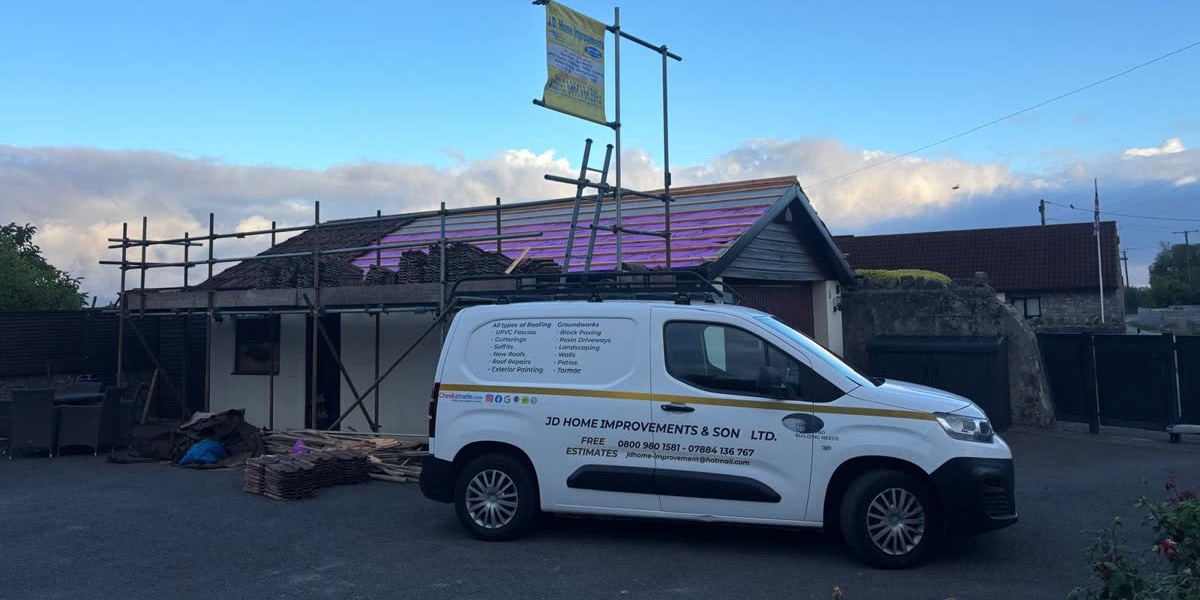
Can you repair a roof in winter? Yes, and in most cases you should. Slipped tiles and cracked flashing get worse with every storm, so a small repair done in December usually costs far less than the bigger job it turns into by April. Roofers work between showers and pick the right materials for the cold, so the work holds.
We are JD Home Improvements, a family run roofing company on West Town Road in Shirehampton, and winter is when we see the difference between people who acted early and people who waited. This guide explains why a winter repair makes sense, which jobs suit the colder months, and what to expect on price.
Why waiting for spring usually costs more
Plenty of homeowners spot a problem in November and decide to leave it until the weather warms up. It feels sensible. Nobody likes the idea of a roofer up a ladder in the rain, and spring sounds like a calmer time for building work.
A roof does not pause for the winter, though. Once a tile has slipped, rain gets in every time it falls, and Bristol sees a lot of rain between October and March. Water that reaches the timber battens and rafters starts to rot them. Water that reaches the loft soaks insulation, which then stops working and adds to your heating bills. If it gets as far as a ceiling, you are paying for plastering and decorating on top of the roof repair.
Frost makes things worse. Water that has crept into a crack freezes overnight and expands, opening the crack a little further. Repeat that across a few cold weeks and a hairline gap in ridge mortar becomes a loose ridge tile. One cracked tile becomes three.
So the real choice is rarely between a winter repair and a spring repair of the same size. More often it is between a modest repair now and a larger one later, with some interior damage thrown in.
What a winter repair actually costs
Prices depend on the roof and what we find once we are up there, so we always quote after looking. To give you a sense of scale, UK cost guides currently put typical repair work in these ranges:
- A couple of slipped tiles: around £150 to £300.
- Replacing one to six broken tiles: roughly £75 to £400 before VAT.
- Finding and fixing a leak: around £250 to £750.
- Scaffolding, where it is needed: often £500 to £1,200 on top.
These figures come from MyJobQuote and Which?, and they are national averages rather than our prices. Compare them with the cost of replacing rotten battens or a stained ceiling, and the case for acting early becomes clear.
Scaffolding is worth a special mention. On a small job it can cost more than the repair itself, so it pays to get everything that needs doing sorted while it is up. If we are on your roof in winter for a slipped tile and spot a cracked valley or a tired gutter, we will tell you, so you can decide whether to deal with it in the same visit.
Which roof jobs suit the winter months
Most repair work carries on through the winter with a little planning. Here is how the common jobs fare.
Slipped and cracked tiles
Tile and slate replacement is ideal winter work. It is quick and needs no wet materials in most cases, and it stops water getting in straight away. Slates are usually refixed with copper or stainless steel clips. Tiles are hooked back onto the battens or nailed where the design allows. Our roof repair service covers this kind of work across Bristol.
Ridge and hip tiles
Traditional ridges are bedded in mortar, and mortar does not like frost. It should not go down when temperatures are near freezing, because water in the mix can freeze before it sets. On cold days we either wait for a milder spell or fit a dry ridge system, which fixes the ridge tiles mechanically with no mortar at all. Dry systems also stand up better to wind, which makes them a sensible upgrade on exposed roofs.
Lead flashing
Lead can be worked in the cold, and new flashing around chimneys and roof windows is one of the most effective ways to stop a winter leak. Where the problem is the chimney itself, our chimney repairs team can rebuild loose top courses and renew the lead once the weather allows repointing.
Flat roofs
Flat roofs need more care in winter. GRP fibreglass needs dry and mild conditions to cure, and EPDM rubber adhesives have minimum working temperatures. Torch-on felt copes better with the cold. In practice, a failing flat roof in winter often gets a sound temporary repair first, with the full replacement booked for a spell of better weather. Our page on flat roofing explains the different systems.
Gutters and fascias
Gutter clearing and repairs are well suited to winter, and they matter most in autumn and early winter when leaves have just come down. Blocked gutters push water back under the bottom row of tiles and down the walls. Full uPVC roofline replacement can go ahead most of the year too. See our guttering and roofline page for more.
How roofers work safely in winter weather
Safety comes first, for our team and your home. We do not go up in high winds, heavy rain or icy conditions, and we check the forecast before every job. Bristol winters are usually mild rather than frozen, so there are plenty of dry days to work with, even in January.
When we start a job and the weather turns, we make the roof watertight before we leave. That might mean refixing tiles we have lifted or covering an open area with heavy-duty sheeting. You should never be left with a roof that is more open than when we arrived.
Shorter days mean shorter working hours, so a job that takes two days in June might run to three in December. We will tell you that up front when we quote.
The quiet advantage of booking in winter
Spring and summer are when most people book planned roofing work, so diaries fill quickly once the weather warms. Getting a repair sorted in winter means you are not competing for dates in April, and you go into the warmer months with a sound roof.
If your roof needs bigger work, winter is also a good time to get it inspected and quoted, then book the main job for spring. Our roof inspections give you a clear picture of what needs doing now and what can wait.
Signs your roof needs attention this winter
You can check most of these from the ground or from inside the loft, without going near a ladder:
- Tiles or slates out of line, or pieces lying in the garden or the gutter.
- Gaps along the ridge, or mortar crumbling from the ridge or the verges.
- Damp patches or staining on ceilings or chimney breasts, especially after heavy rain.
- Daylight through the roof when you look up from inside the loft.
- Overflowing gutters, or water running down the outside walls.
- Ponding on a flat roof that sits for days after rain.
Homes on exposed ground, near the estuary in Avonmouth or along the coast at Portishead, take the worst of the westerly winds. Hilltop areas such as Kingswood catch strong gusts too. If you live somewhere exposed, a quick look after every big storm is a good habit.
If water is already coming in
If you have water coming through a ceiling right now, the priority is to stay safe and limit the damage. Move belongings away from the drips and switch off electrics near the water. Please do not go onto the roof yourself. Our urgent roof repair guide walks through what to do while you wait, and you can ring us on 07717 610410.
A simple winter plan for your roof
You do not need to become a roofing expert. A few small steps make a real difference:
- Look from the ground in late autumn and after any big storm.
- Check the loft on a bright day for daylight or damp.
- Keep the gutters clear once the leaves have fallen.
- Call early when you spot something, while it is still a small job.
Whatever we find, you pay nothing until the work is finished and you are completely happy with it. That has always been how we work, in summer or winter.
Winter roof repair FAQs
Can a roof be repaired in the rain?
Small, safe jobs can sometimes go ahead in light drizzle, but we do not work in heavy rain or strong wind. In wet spells we make the roof watertight and come back to finish the permanent repair on a dry day.
Is it too cold to replace roof tiles in winter?
No. Tiles and slates can be replaced in cold weather because the work is mostly mechanical. Mortar is the exception, so on frosty days we wait for a milder spell or use dry fix systems.
Should I wait until spring to fix a small leak?
We would advise against it. A small leak lets water into the battens and insulation every time it rains, and frost can widen the gap. Fixing it early is usually quicker and costs less.
Can you replace a flat roof in winter?
Sometimes. Torch-on felt can be laid in cooler weather, while GRP and EPDM need milder, dry days. We often make a failing flat roof watertight first and book the full replacement for better weather.
How much does a winter roof repair cost?
It depends on the job, but national guides put a couple of slipped tiles at around £150 to £300 and a leak repair at around £250 to £750, with scaffolding extra where needed. We give a free quote after looking at your roof.
Do roof repairs take longer in winter?
They can, because daylight is shorter and we sometimes pause for weather. We will tell you how long we expect the job to take when we quote.
How can I check my roof safely in winter?
Stay on the ground. Look at the roof from the garden or across the street, and check the loft for damp or daylight on a bright day. Leave anything at height to a roofer.
Talk to us before the next storm
If something on your roof does not look right, it is almost always cheaper to deal with it now. Call 07717 610410 or ask for a free quote, and we will come and take a look.